What you actually own
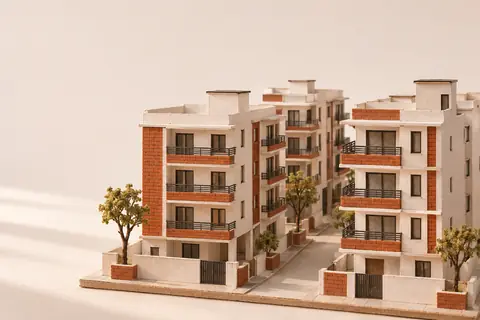
A builder floor is one floor of a low-rise building, often stilt parking plus four floors, sometimes ground plus three up to ground plus six. Each floor is usually sold with its own sale deed and registry. Many are marketed as "freehold". That word can mean different things, so read what the sale deed actually conveys: an undivided share in the land, the right to the roof or terrace, a named parking space in the stilt, and your share of common areas such as the staircase and lift.
Where the building stands matters too. In Noida, many builder floors are on village (abadi or Lal Dora) land in places such as Sarfabad. Others are on plots allotted by the Noida Authority, which are held on lease from the Authority rather than owned outright. Each comes with its own paperwork, which our buying checklist walks through.
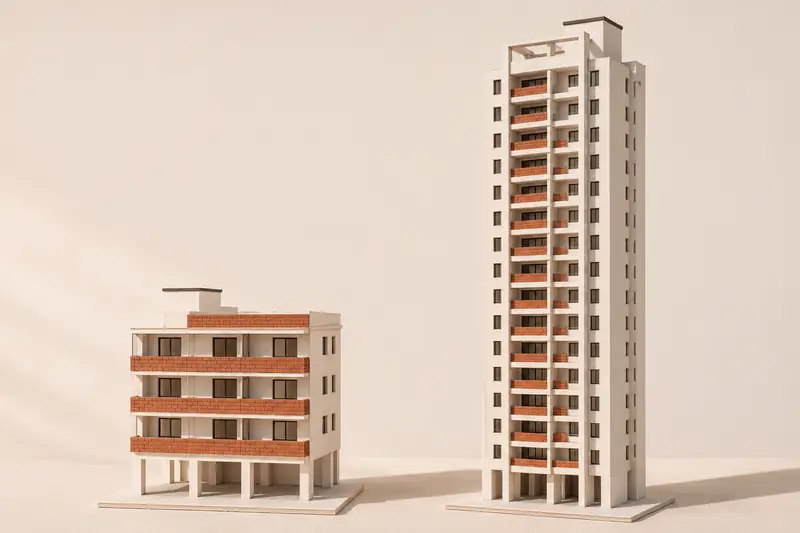
An apartment in a group-housing society is one unit in a larger project. You share the project land with many other owners, and common areas are run by a residents' association once the developer hands over. Projects on a plot over 500 sq m, or with more than eight apartments, must register with UP RERA. Most group-housing projects cross that line. Many small builder-floor buildings do not, so always check.
Maintenance, privacy and everyday living
This is where builder floors win many buyers over. There is usually no large society, so monthly costs tend to be low, often just a share of lift servicing, stairwell lighting, cleaning and the water pump, agreed among the owners. You have fewer neighbours, often one family per floor, and more say over your own space.
The flip side is that you share the work. With no professional facility manager, someone has to organise lift servicing, water-tank cleaning and repairs. Ask how this is handled in the building today and who pays.
Group-housing societies charge a monthly maintenance fee, usually per square foot. In return you typically get guarded gates, CCTV, power backup, parks, a clubhouse and sometimes a pool or gym. If those matter to your family, a society makes sense. If you would rather not pay for facilities you will not use, a floor may suit you better.
Side by side
| Factor | Builder floor | Group-housing apartment |
|---|---|---|
| Registry | Usually one sale deed per floor | One sale deed per flat |
| Land share | Shared among a few owners; check what the deed says | Spread across many owners |
| Monthly maintenance | Low, shared among owners | Higher, paid to the society or developer |
| Privacy | Few neighbours, often one family per floor | Many neighbours, shared lifts and lobbies |
| Amenities | Few or none | Parks, clubhouse, gym and more, depending on the project |
| Security | Arranged by the owners, if at all | Usually guarded gates and CCTV |
| RERA | Many small buildings fall below the threshold; check | Most projects are registered; check the number |
| Home loans | Depends on title and approvals; lenders differ | Usually simpler, especially in projects a bank has already approved |
| Resale | Depends on location and paperwork | Often easier in well-known projects |
| Quality checks | You can inspect one builder's work closely | Developer record and RERA filings help, but inspect anyway |
Loans and resale
Banks look at the property as closely as they look at you. For a flat in a project the bank has already approved, the legal check is often quick. For a builder floor, the lender will want to see the title chain, the approved building plan where one applies, and sometimes the completion or occupancy certificate. Some lenders are cautious about floors on village land. Others lend on them after their own legal check. Ask two or three lenders before you commit. Our home-loan guide covers this in detail.
Resale follows the same logic. A floor with clean papers in a popular pocket near the metro can sell well. A floor with unclear title, or one that buyers cannot get a loan on, will take longer to sell and may need a lower price. When you buy, think about the checks your future buyer's bank will make too.
Checking construction quality
With a small builder there is no large-project record to lean on, so look harder yourself. Walk the whole building, not only your floor. Look for cracks in beams, columns and outer walls, damp patches on ceilings and under windows, and seepage near bathrooms. Ask about waterproofing on the roof and in wet areas, the make and servicing of the lift, the wiring and the plumbing. If the building is still going up, ask to see the structural drawings and visit at different stages.
Apartments need checking too. But a buyer cannot easily judge a large tower's structure, so the developer's record and the project's RERA filings carry more weight there.
Making the choice
- A builder floor often suits families who want more space and privacy for their budget, low monthly costs and a home that feels like their own, and who are willing to check the paperwork carefully.
- A group-housing apartment often suits buyers who want amenities, managed security and a simpler loan process, and who accept a higher monthly maintenance bill.
If you are torn, visit one of each in the same week. You can book a free site visit with us, or browse current listings to compare prices.
Questions about a floor you have seen?
We can go through the papers, the loan and the costs with you, free.