The sectors at a glance
| Area | Main housing type | Nearest metro |
|---|---|---|
| Sector 70 | A mix of builder floors and group housing | Sector 61 (Blue Line) |
| Sector 73 and Sarfabad | Mostly dense builder floors | Sector 50 and Sector 51 (Aqua Line) |
| Sector 74 | Mostly group-housing societies | Sector 50, 51 or 76 (Aqua Line) |
| Sector 75 | Mostly group housing, plus the Spectrum Metro commercial complex | Sector 50, 51 or 76 (Aqua Line) |
Blue Line stations at Sector 52 and at Sector 61 or 62 are also a short drive from Sectors 73 to 75. Check the exact route on a map.
Sector 70
Sector 70 has a mix of builder floors and group housing. Its nearest metro station is Sector 61 on the Blue Line, which runs towards Delhi, and the office hubs of Sectors 62 and 63 are a short drive away. It can suit buyers who commute on the Blue Line or work in that direction.
Because the sector mixes housing types, two homes a few streets apart can differ a lot in price, paperwork and upkeep. Ask what kind of land and building each listing is before you compare prices. See the Sector 70 page.
Sector 73 and Sarfabad
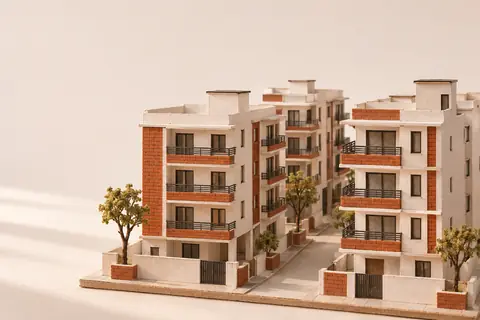
Sector 73 is known for dense builder floors, much of them in and around Sarfabad village. Lanes are narrow, many buildings are stilt plus four floors, and the range of sizes and prices is wide. According to Housing.com listings for Sector 73, November 2026, 1 to 4 BHK floors are listed from about ₹24 lakh to about ₹76 lakh, roughly ₹3,400 to ₹4,600 per sq ft. Many floors here are on village (abadi or Lal Dora) land, so title and loan checks need extra care.
Read our full Sector 73 guide, or see the Sector 73 and Sarfabad pages.
Sector 74
Sector 74 is mostly large group-housing societies: high-rise towers in gated campuses, with the amenities that come with them. If you want an apartment with managed security and shared facilities, close to the builder-floor sectors next door, it is worth a look. Expect a higher monthly maintenance bill than in a builder floor.
If you are looking at a resale flat in a society, ask for proof that maintenance dues are cleared, find out what NOC or transfer process the society or developer requires, and check whether the project has its occupancy certificate. Look up the project's RERA record too. See the Sector 74 page.
Sector 75
Sector 75 is also mostly group housing, and it is home to the Spectrum Metro commercial complex, so shops and services are close at hand. Buyers who want society living near a commercial hub often look here.
If you are weighing a society flat here against a builder floor in Sector 73 on the same budget, compare the monthly maintenance, the space you get and the loan process side by side. See the Sector 75 page.
The high-rise alternative: Noida Extension
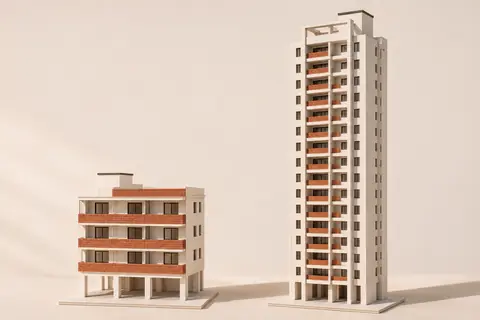
If your budget points you towards a newer apartment rather than a floor, you may also look at Noida Extension, officially Greater Noida West. It falls under the Greater Noida Industrial Development Authority (GNIDA), not the Noida Authority, and is mostly high-rise group housing. You get newer societies with amenities, but you take on society maintenance and, in under-construction projects, the risk of a late possession date. Check any project's RERA registration and timeline on up-rera.in (opens in a new tab).
See our Noida Extension page, and our builder floor vs apartment guide for the wider trade-offs.
Choosing between them
- For your own floor, low maintenance and a budget of around ₹25 lakh to ₹60 lakh, start with Sector 73 and Sarfabad.
- For a society with amenities in the same area, look at Sectors 74 and 75.
- For a Blue Line commute, look at Sector 70.
- For a newer high-rise, compare with Noida Extension.
- If you are buying to rent out, ask what similar homes in each sector actually rent for before you decide.
Whichever you choose, check the route to work on a map at the hours you travel, and visit more than once. You can see every area on our locations page, or get in touch to plan a visit.
Questions about a floor you have seen?
We can go through the papers, the loan and the costs with you, free.